
WGS Director’s Statement on the Reversal of Roe vs. Wade
As of June 24, 2022, the US Constitution no longer protects the right to abortion. The highest court has overturned Roe v. Wade (1973), repealing a hard-fought fundamental right for a person to choose to terminate their own unwanted pregnancy.
The Dobbs decision runs contrary to the most basic feminist demands: to be treated as full and complete humans, capable of reasoning, of making decisions for themselves and their communities, and not to be considered minors, but rather adults. The Supreme Court’s ruling pushes the rights of women (and all people who have the capacity to become pregnant) backward, not just half a century, but at a minimum, two centuries backward.
We in the MIT Women’s & Gender Studies Program are appalled by this decision and protest it. It is a misogynist attack on human rights - perpetrated by both men and women– that will harm pregnant people, their families, and the whole nation. The Court has dismissed the fact that abortion is healthcare. As a consequence, poor and marginalized groups will become poorer, many will die a preventable death, careers will not be achieved, and dreams will not be realized. It is fundamentally unfair to force pregnancy and birth upon any individual.
We cannot live comfortably with this even if Massachusetts does currently protect our reproductive rights. A human right has just been taken away. The Dobbs decision sets a precedent and endangers further rights, such as contraceptive usage and same-sex marriage. We must raise the alarm to the highest level, or I fear it will soon be too late.
MIT’s WGS Program is committed to keeping these issues at the forefront of our university-wide conversations. We will help create and sustain awareness about this uniquely dangerous threat to democracy at home and in the world. History shows what happens when people’s sovereignty over their bodies is delegated to the state: the doors to totalitarianism open wider.
Our programming for AY 2022-23 is dedicated to reproductive health, rights, and justice. Through talks and panels, we will approach the topic of abortion with a scholarly, interdisciplinary lens. Our list of events will be announced in late August on our website.
Lerna Ekmekcioglu
Director of WGS
McMillan-Stewart Associate Prof. of History
Congratulations to RISE award recipients!
Join us in once again congratulating our WGS Director, Prof. Helen Elaine Lee, who recently won the 2021 faculty RISE (Recognizing Individuals Supporting Equity) Award for her work supporting MIT students.
Congratulations also to Sandy Jean Charles, one of our WGS student staff members, who won a Mens et Manus RISE Award for her dedication to improving the MIT community.
And another huge congratulations to one of our WGS minors, Abena Peasah, who won a RISE Unsung Hero Award for her passion about improving equity and inclusion at MIT.
If you missed the RISE Award ceremony, you can still watch the webcast.
Congratulations to Prof. Ed Bertschinger!
Join us in congratulating Professor Ed Bertschinger, who was recently awarded the Everett Moore Baker Award for Excellence in Undergraduate Teaching. This award is student nominated. He was nominated by several students in WGS.160 Science Activism: Gender, Race, and Power. If you missed the virtual awards convocation, you can watch the entire celebration. (Prof. Bertschinger is recognized around minute 21).
Congratulations to WGS Director Prof. Helen Elaine Lee!
Join us in congratulating WGS Director Professor Helen Elaine Lee, who received an MLK Leadership Award for her tireless work to support students, the MIT community, and the greater Boston area community. If you missed the webcast, you can still view it!

Heartsick. Anguished. Enraged.
Here we go again with the grief and outrage of being black in America.
Heartsick. Anguished. Enraged.
Here we go again with the grief and outrage of being black in America.
This time, we’re trying to survive two pandemics. With covid, our communities are suffering disproportionate sickness and death borne of longstanding inequality, and enduring exploitation as “essential” workers with no choice but to show up and risk exposure to do the work that keeps the socioeconomic engine going, without fair compensation, health insurance, or even basic resources to prevent the spread of the virus. And the pandemic of racism and violence directed at black people rages on.
Whiteness continues to be weaponized and black lives continue to be criminalized. Endlessly, everywhere, we are surveilled and policed. On a whim or with a casual flexing of the muscle of white privilege, we are removed from public space. We know that we may be harassed for being in a Starbucks or a library, entering an Airbnb rental, having a cookout. And we may well pay with our lives for the pleasure of running in the open air or watching birds.
Militarized police brutalize and murder us on the street and in our own homes, and as they show contempt for our lives and humanity, they continue to be protected by police unions and codes of silence and outright lies.
Black women, black queer people, and black trans people continue to be debased and subjected to disproportionate state, institutional, and personal violence.
Injustice after injustice, it’s enough to make us explode. We try to keep on seeing it, even as it breaks our hearts, and carry on. But the all of it feels sometimes like more than we can bear. The casual disregard, disrespect, silencing, and devaluation that we experience as facts of daily life. Routine institutional indifference and malignant neglect. Organized, systematic assaults on the rights and resources and opportunities of black people.
The pain of this moment has struck me speechless for a stretch of days and left me wondering what words would go beyond sanguine, institutional reassurances to do justice to the realities we are living. This is what I’ve got to say.
We must keep talking about the organization and funding of the project of white supremacy that deepens inequality and attacks black lives by strategic design, and we must keep talking about who invests in and profits from this project.
I will keep on seeing, and I will keep on writing stories and novels that honor our complex and beautiful black lives, and trying to expand student understanding and inquiry in the classroom.
WGS will continue to do the work of educating MIT students through the intersectional lens of race, gender, class and sexuality. We will continue to uphold values of social justice. We will work to hold the MIT administration and the MIT community as a whole accountable to confronting racial inequity on campus and beyond.
Racial justice is everybody’s work. How will you contribute?
Helen Elaine Lee
Director, MIT Program in Women's & Gender Studies
COVID-19 Response
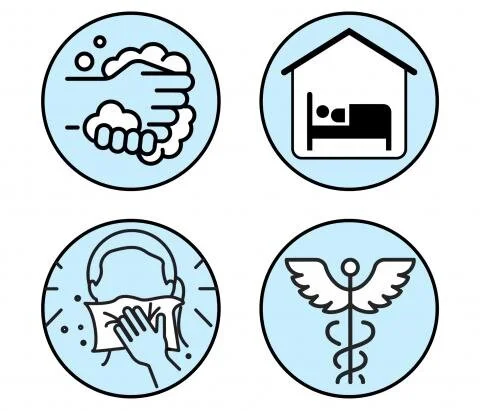
Please see MIT’s official website for its ongoing response to the challenges of COVID-19 for updates.
Please see MIT’s official website for its ongoing response to the challenges of COVID-19 for updates: mit.edu/covid19/
All WGS events have been cancelled for the Spring 2020 semester.
Check out our Fall 2020 subjects! Explore what classes you’ll be able to take if you join us at MIT, whether virtual or in person.
Learn all about the WGS Program by exploring these intro slides!
Quick sheet on subjects planned for Fall 2020!
Current WGS students, please contact WGS if you need support with completing your WGS subjects, access to resources, navigating self care, and difficulties posed by leaving campus in Spring 2020.

WGS History
The Women’s Studies Program opened in September 1984 with a two-week series of activities—“Diversity and Change: A Celebration of Women.”
WGS History
The Women’s Studies Program opened in September 1984 with a two-week series of activities—“Diversity and Change: A Celebration of Women” —designed, according to founding director Ruth Perry, “to announce an energized program to the MIT community.” Speakers included historian of science Evelyn Fox Keller and Shirley Malcolm, head, Office of Opportunities in Science, American Association for the Advancement of Science. Keller and Malcolm spoke on “Women’s Studies in Technology and Science Education.”
While women’s studies had been an informal part of the MIT curriculum for some time before, the fall of 1984 marked both the establishment of an administrative unit dedicated to building the program and the first official appearance of women’s studies in the MIT Bulletin. Among the initial offerings was a core subject, “Introduction to Women’s Studies.” More than a dozen faculty from a range of disciplines and departments offered subjects in women’s studies at the time.
Over the course of the next decade, as the proportion of women in the MIT freshman climbed from 29 percent to 40 percent, Women’s Studies grew to include 26 affiliated faculty members offering courses to almost 500 students a year. In 1994, seven students were minoring in women’s studies (six courses) and 24 were pursuing concentrations (at least 3 courses). Nine students graduated as women’s studies majors between 1984 and 1994. The first women’s studies course offered in the School of Science “Reproductive Biology,” was taught by Nancy Hopkins and became a model for the new Institute requirement in biology.
The sponsorship of conferences has been an important part of the role of Women’s Studies at MIT. Among the major events were a conference on pornography in 1985 (jointly with Harvard University), bringing together feminists of differing viewpoints, including Women Against Pornography and the Feminists Against Censorship Task Force. A three-week program on Asian women was convened in March 1987, with cultural events, panel discussions, and lectures. A three-day conference in January 1994, “Black women in the Academy: Defending Our Name, 1894- 1994,” was the first of its kind anywhere and attracted eminent speakers such as Lani Guinier, Johnnetta Cole, and Angela Davis. To celebrate its tenth anniversary, Women’s Studies presented “An Evening with Lily Tomlin and Jane Wagner,” in Kresge Auditorium, 30 October 1994. In 1997, Women’s Studies co-sponsored “From Barbie to Mortal Kombat,” a conference on gender and computer games exploring the consequences of girls’ lesser and later access to computer play compared to boys.
Other significant activities include the Consortium on Graduate Women’s Studies, established in 1993 jointly between MIT and six other institutions—Radcliffe College, Boston College, Brandeis University, Harvard University, Northeastern University, and Tufts University. An award offered annual, the Louis Kampf Writing Prize in Women’s and Gender Studies, was founding in 1996 in honor of retired literature professor Louis Kampf. A chair in women’s studies, the Genevieve McMillan and Reba Steward Professorship in the Study of Women in the Developing World, was established in 1996.
The Women’s Studies Research Room in Humanities Library is a growing multidisciplinary resource for the study of women and gender.

My Sister's Keeper in the news!
MSK aims to increase connections, mentoring, and success.
My Sister's Keeper builds community for black women students at MIT.

Land Acknowledgement
MIT is on the unceded territory of the Wampanoag Nation.
Land Acknowledgement
The Indigenous Peoples are the traditional stewards of the land where MIT is located. MIT is on the unceded territory of the Wampanoag Nation. We acknowledge the painful history of genocide and forced removal from this territory, and we honor and respect the many diverse indigenous people connected to this land.
WGS Statement on Equity, Inclusion & Diversity
WGS values the diversity and inclusion of our students, faculty, and staff members with regard to their backgrounds, experiences, and perspectives
WGS Statement on Equity, Inclusion & Diversity
Inclusion, equity, and diversity are fundamental to the WGS mission. Through teaching, research, and programming, we provide a structural framework that is specifically focused on examining and analyzing the intersections of gender, race, ethnicity, class, and sexuality. WGS values the diversity and inclusion of our students, faculty, and staff members with regard to their backgrounds, experiences, and perspectives. We seek to embody the belief that not only should we impart critical academic tools, but that we should also serve students by providing community, resources, and emotional support.
In concert with MIT-wide efforts to build a more welcoming, inclusive community at MIT, we emphatically affirm that while the quality of our students’ work is important, their mental and physical health is most important. The mental and physical well-being of our students is essential to their well-rounded and holistic education. Recognizing this, we affirm that we value one another first and foremost as human beings, with all of our distinctive differences. And we believe that, consistent with our individual strengths and abilities, we should help each other sustain the physical and emotional well-being that is vital to our success in learning, inventing, solving problems, thinking boldly, discovering new truths, growing as individuals, mentoring others, and collaborating effectively as team members. The scope of MIT’s mission – bringing knowledge to bear on the world’s great challenges – compels us to seek, welcome and join forces with talented people from everywhere, to create a stronger MIT. In pursuit of that mission, we also strive to create a community with equal access and opportunity, where we take care to treat one another with fairness, openness, respect, and kindness.
As part of our long-term commitment to diversity, equity, and inclusion, we have implemented initiatives such as My Sister’s Keeper, the re:Vision Women Writers Reading Series, and programming that serves and supports underrepresented minority and lgbtq members of the MIT community. We pledge to continue working with the Office of Minority Education, the Institute Community & Equity Office (ICEO), the Office of Multicultural Programs, and student groups, and we pledge to encourage, through our curriculum and our programming, attention to and activism on social and racial justice issues. And although WGS is a program, rather than a department, it pledges to support the hiring of underrepresented faculty members by departments and the recruitment, acceptance, and support of underrepresented minority graduate students. WGS pledges to continue to advance diversity, equity, and inclusion among our students, and our academic and administrative staff members.
For more on well-being, diversity, and inclusion at MIT see the MIT Black Student Union’s Recommendations, and the home page of the ICEO.