
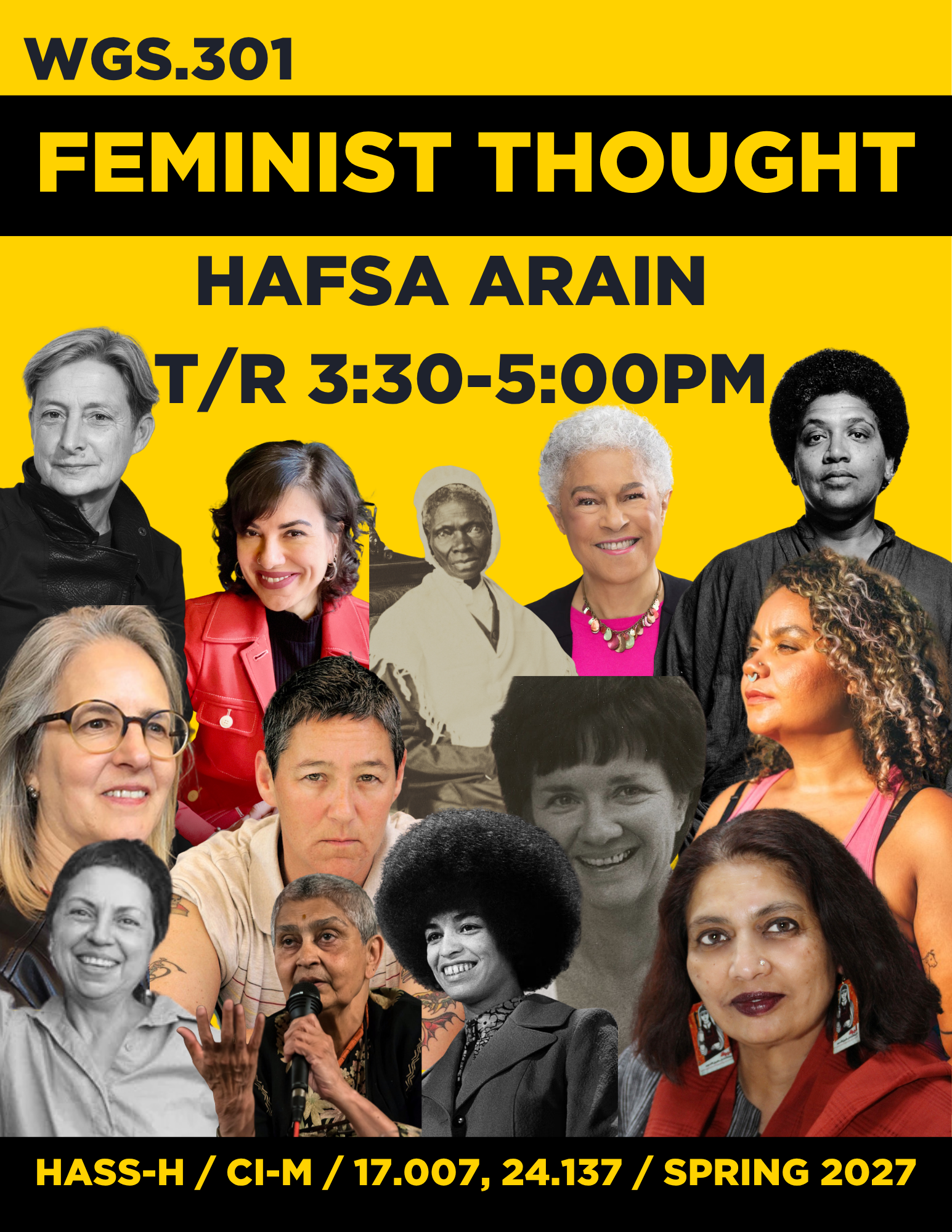
WGS.301 Feminist Thought
Analyzes theories of gender and politics, especially ideologies of gender and their construction; definitions of public and private spheres; gender issues in citizenship, the development of the welfare state, experiences of war and revolution, class formation, and the politics of sexuality. Graduate students are expected to pursue the subject in greater depth through reading and individual research.
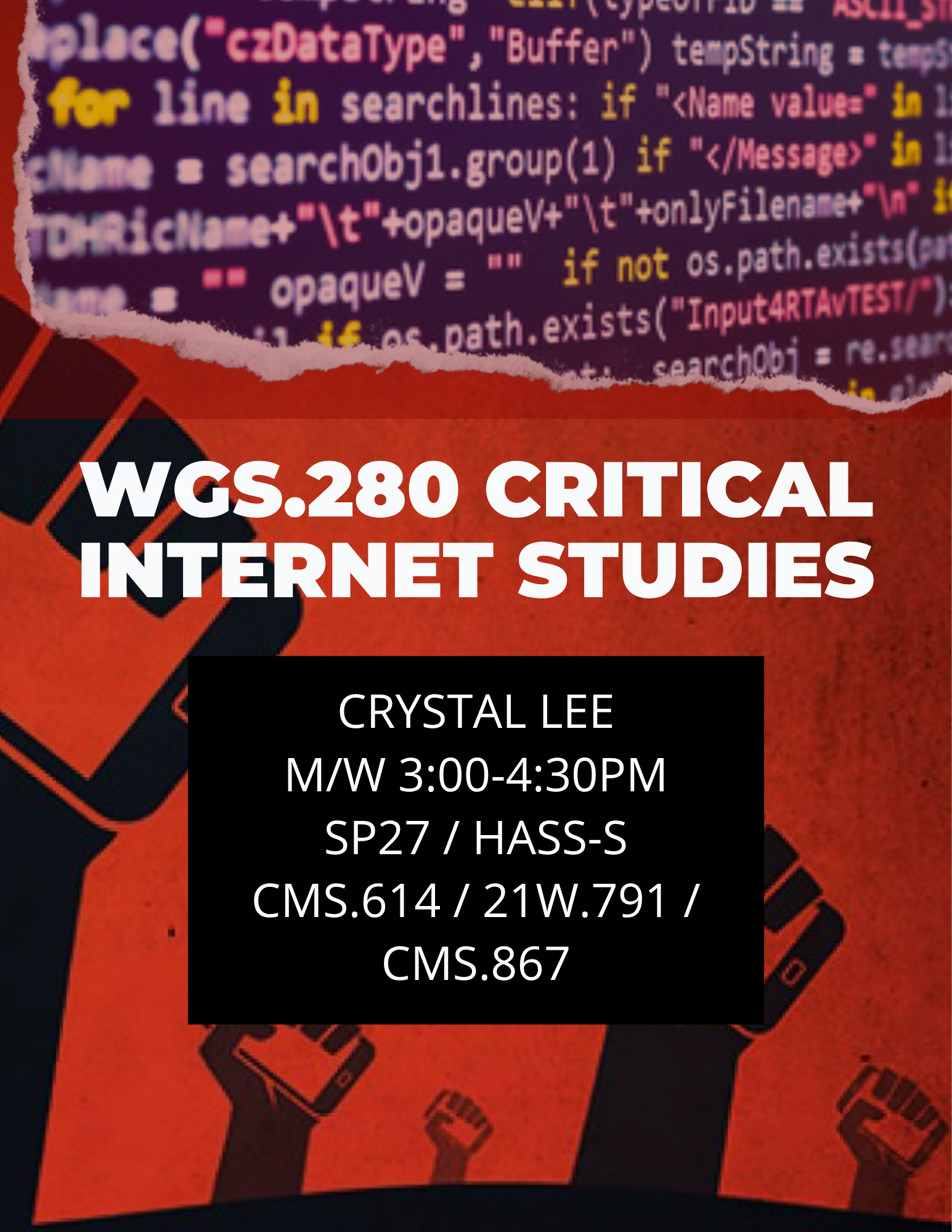
WGS.280 Critical Internet Studies
Focuses on the power dynamics in internet-related technologies (including social networking platforms, surveillance technology, entertainment technologies, and emerging media forms). Theories and readings focus on the cultural, social, economic, and political aspects of internet use and design, with a special attention to gender and race. Topics include: online communication and communities, algorithms and search engines, activism and online resistance, surveillance and privacy, content moderation and platform governance, and the spread of dis- and misinformation. Instruction and practice in written and oral communication provided. Students taking the graduate version complete additional readings and assignments.
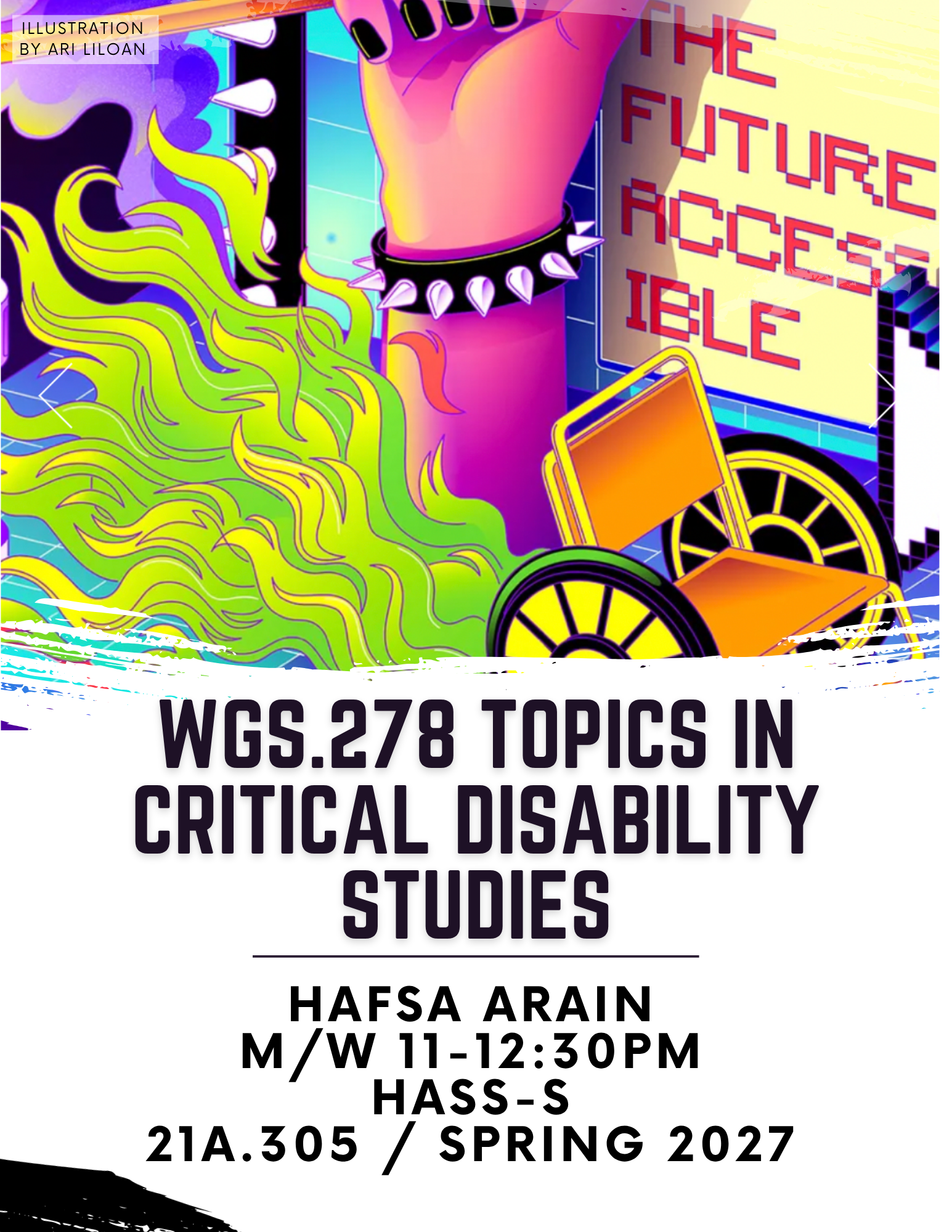
WGS.278 Topics in Critical Disability Studies
Examines various intersections of health and disability studies within a framework of gender and sexuality studies, critical race theory, geography, decolonized psychology, and cultural studies. Topics vary each year; examples include carceral states, social categorizations of populations, historical and literary studies, and healthcare.
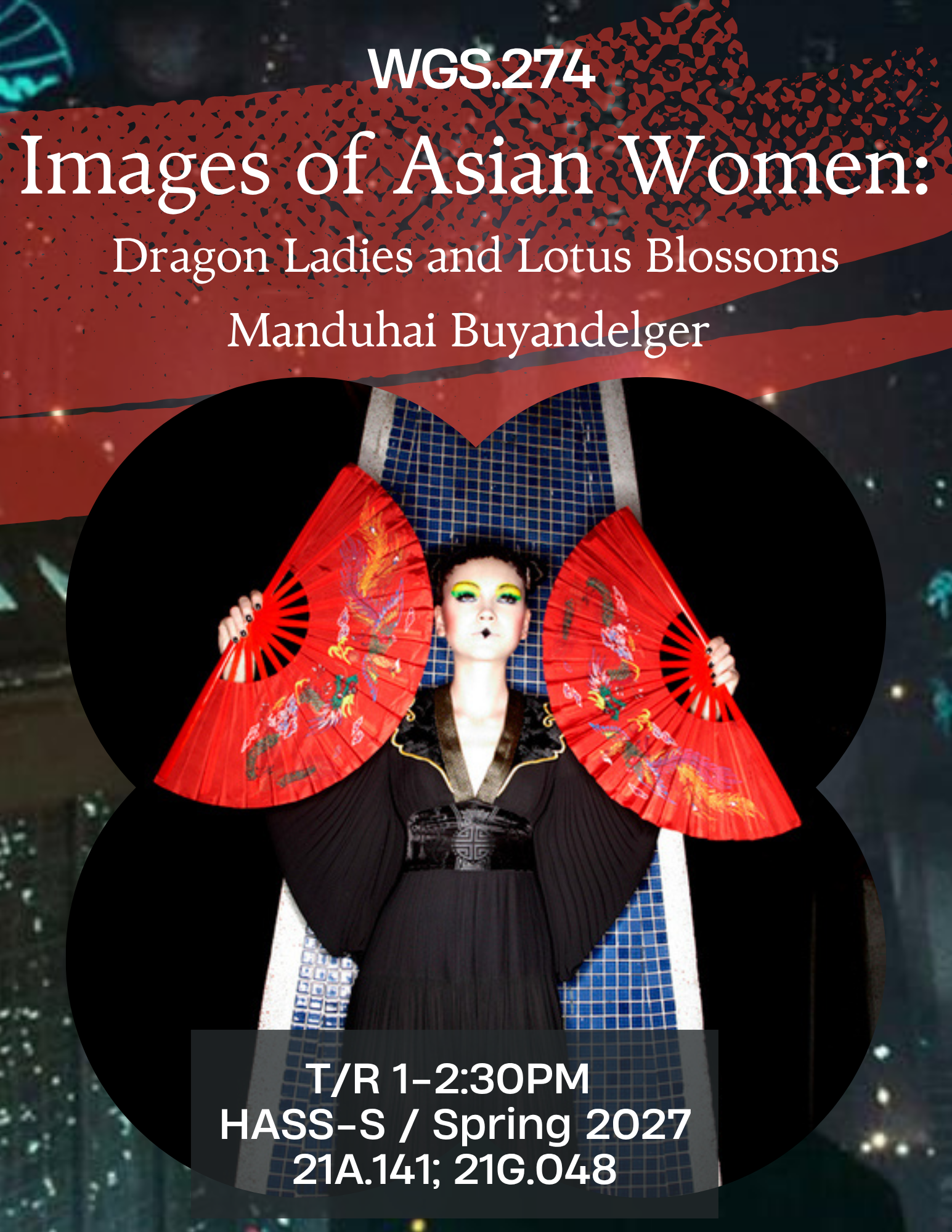
WGS.274 Images of Asian Women: Dragon Ladies and Lotus Blossoms
Explores some of the forces and mechanisms through which stereotypes are built and perpetuated. In particular, examines stereotypes associated with Asian women in colonial, nationalist, state-authoritarian, and global/diasporic narratives about gender and power. Students read ethnography, fiction, and history, and view films to examine the politics and circumstances that create and perpetuate the representation of Asian women as dragon ladies, lotus blossoms, despotic tyrants, desexualized servants, and docile subordinates. Students are introduced to debates about Orientalism, gender, and power.
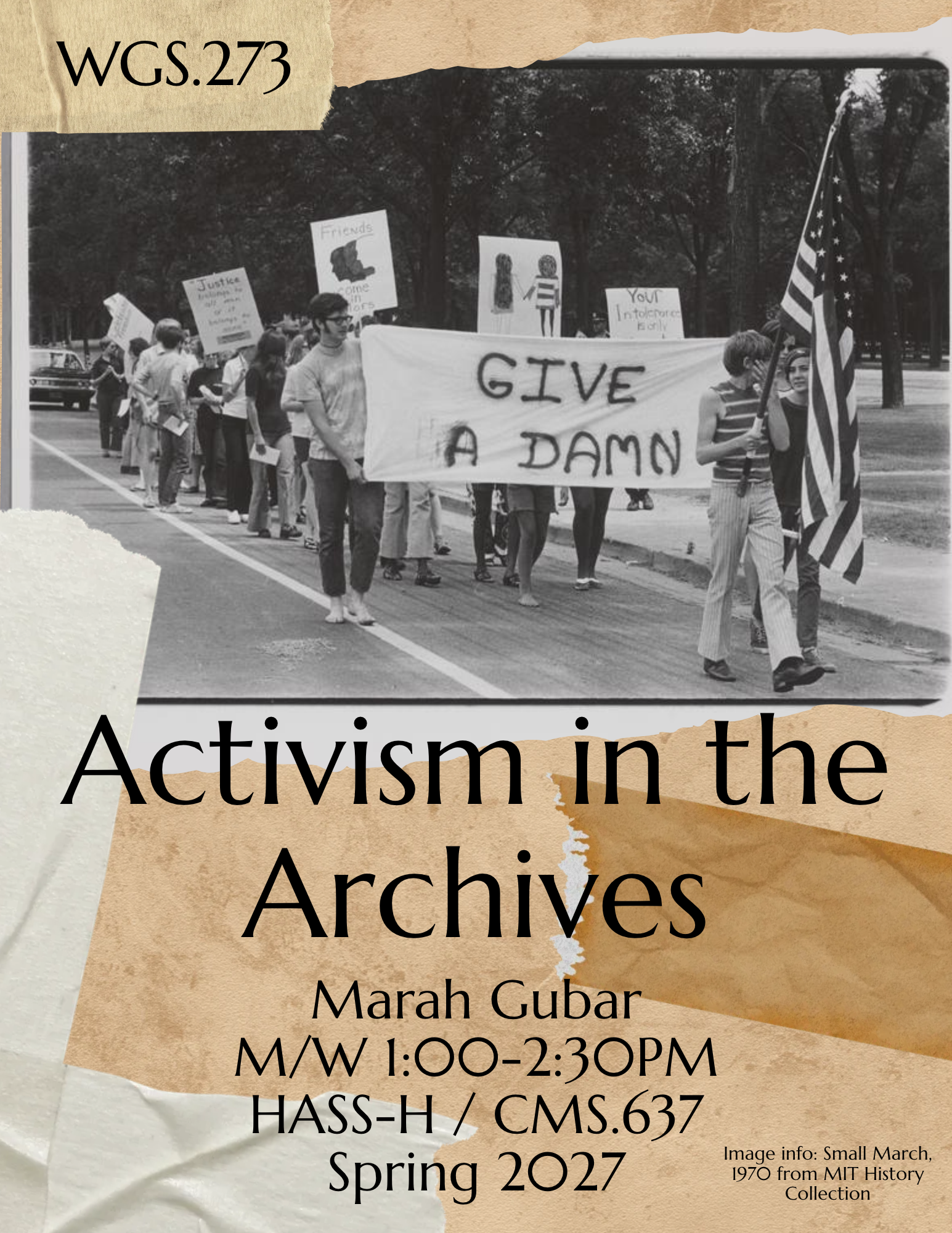
WGS.273 Activism in the Archives
Subject will introduce students to some of most impactful examples of student, faculty, and staff activism at MIT and explore how to engage in feminist research. Perform hands-on research and engage directly with MIT’s Distinctive Collections to deepen collective knowledge of history of activism on MIT campus. Interact with faculty and staff involved with activism and/or archival research about activism at MIT. Analyze feminist, queer, Indigenous, Black, and Latinx studies and encounter a diverse array of artists to explore the topics of archives, how to engage responsibly, archive activism, and what is left out of the archives. Students will present research findings at a teach-in to educate our community about different kinds of activism at MIT.
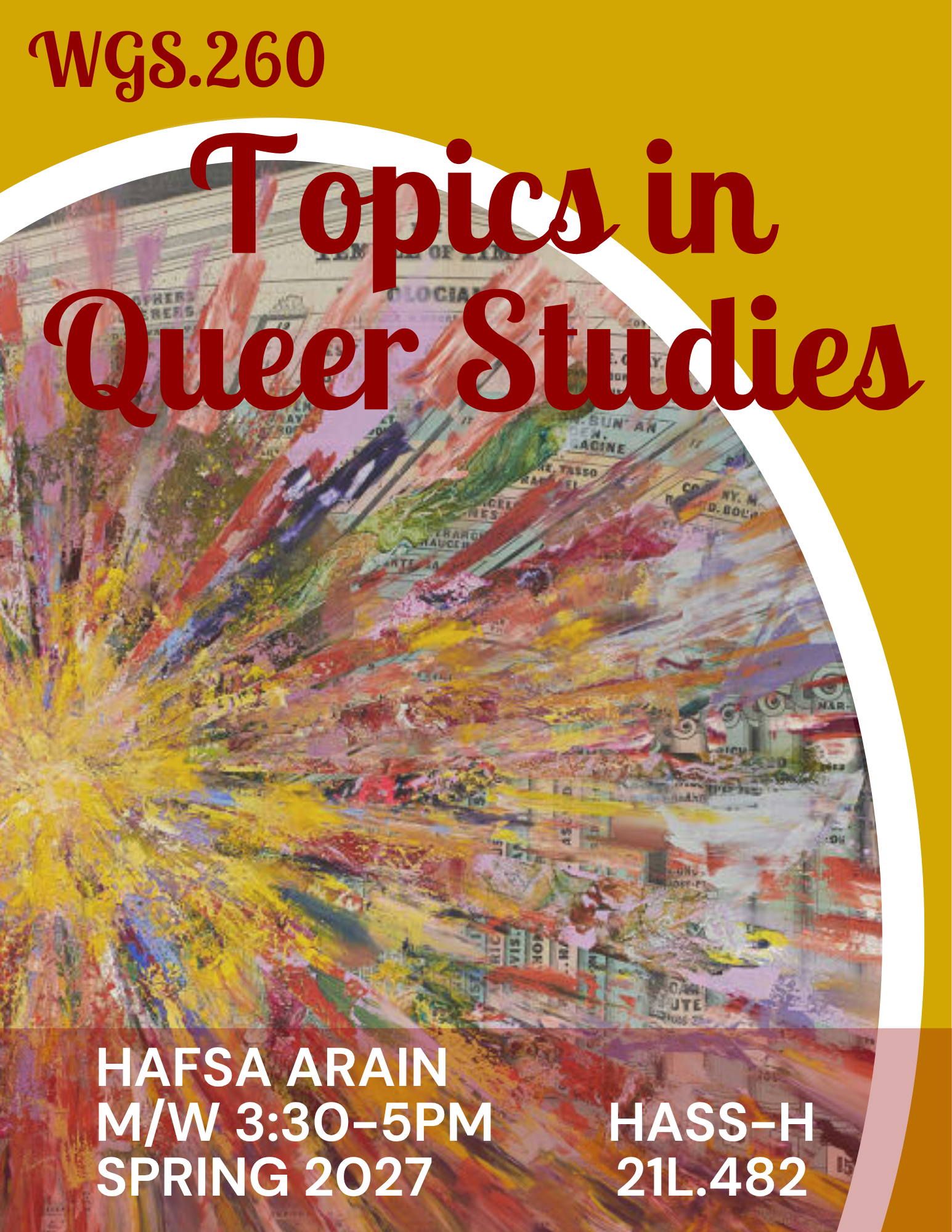
WGS.260 Topics in Queer Studies
Develops critical understanding of queer theory through foundational and contemporary texts and other media forms. Examines relationships between queer theory and other social and cultural theories that probe and critique power, privilege, and normativity including critical race theory, transgender studies, feminist theory, and disability theory. Topics may include social movements, queer of color critiques, transnational activisms, and transgender politics.
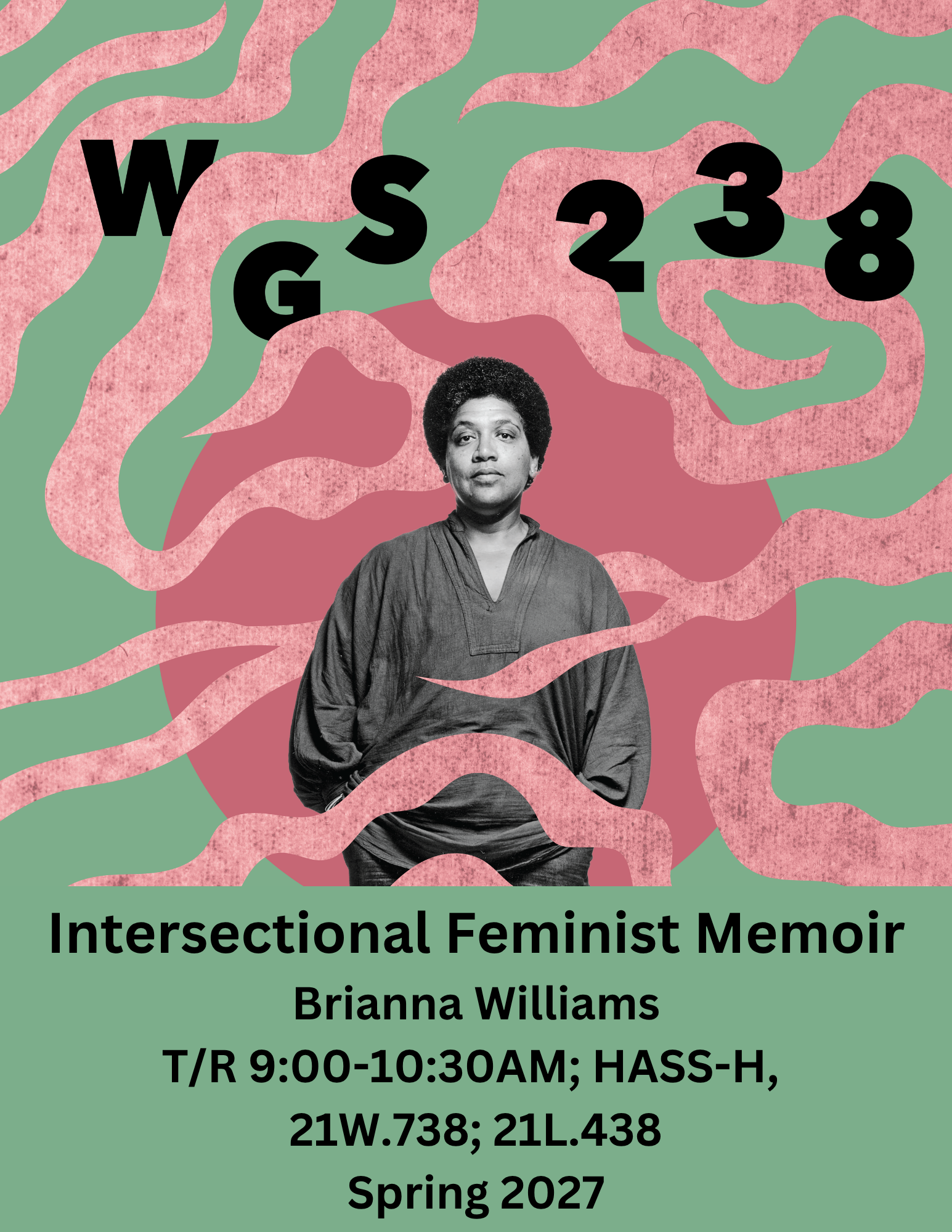
WGS.238 Intersectional Feminist Memoir
Explores the memoir genre through a feminist intersectional lens, looking at the ways in which feminist writers ground personal experience within a complex understanding of race, gender, sexuality, class, ethnicity, immigration status/nationality, and dis/ablity. Gives particular attention to the relationships between the personal and the political; form and content; fact, truth, and imagination; self and community; trauma and healing; coming to voice and breaking silence. Readings include books by Audre Lorde, Janet Mock, Daisy Hernandez, Jessica Valenti, and Ariel Gore, and shorter pieces by Meena Alexander and Leah Lakshmi Piepzna-Samarasinha. Drawing on lessons taken from these works, students write a short memoir of their own.
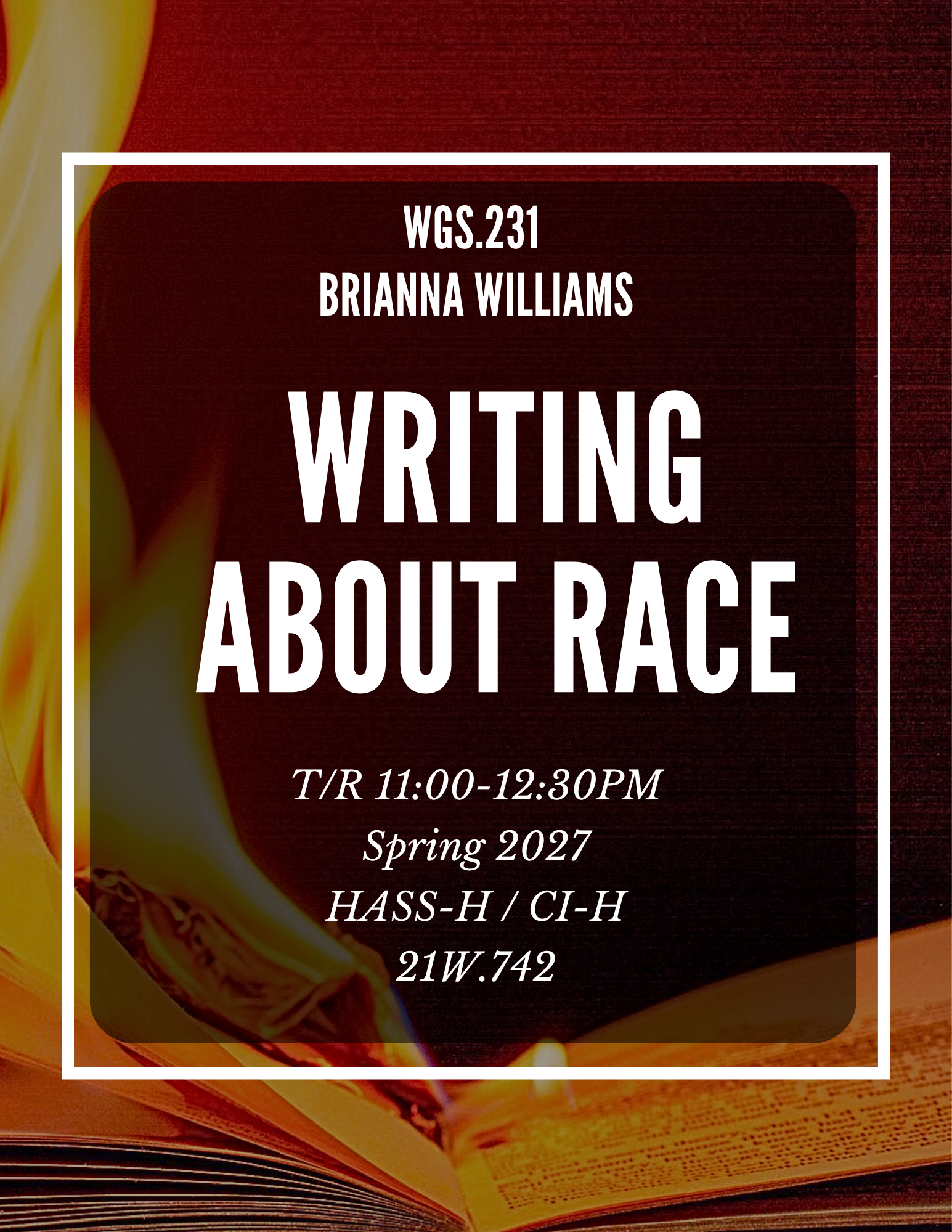
WGS.231 Writing About Race
The issue of race and racial identity have preoccupied many writers throughout the history of the US. Students read Jessica Abel, Diana Abu-Jaber, Lynda Barry, Felicia Luna Lemus, James McBride, Sigrid Nunez, Ruth Ozeki, Danzy Senna, Gloria Anzaldua, Judith Ortiz Cofer, Carmit Delman, Stefanie Dunning, Cherrie Moraga, Hiram Perez and others, and consider the story of race in its peculiarly American dimensions. The reading, along with the writing of members of the class, is the focus of class discussions. Oral presentations on subjects of individual interest are also part of the class activities. Students explore race and ethnicity in personal essays, pieces of cultural criticism or analysis, or (with permission of instructor) fiction. All written work is read and responded to in class workshops and subsequently revised. Enrollment limited.
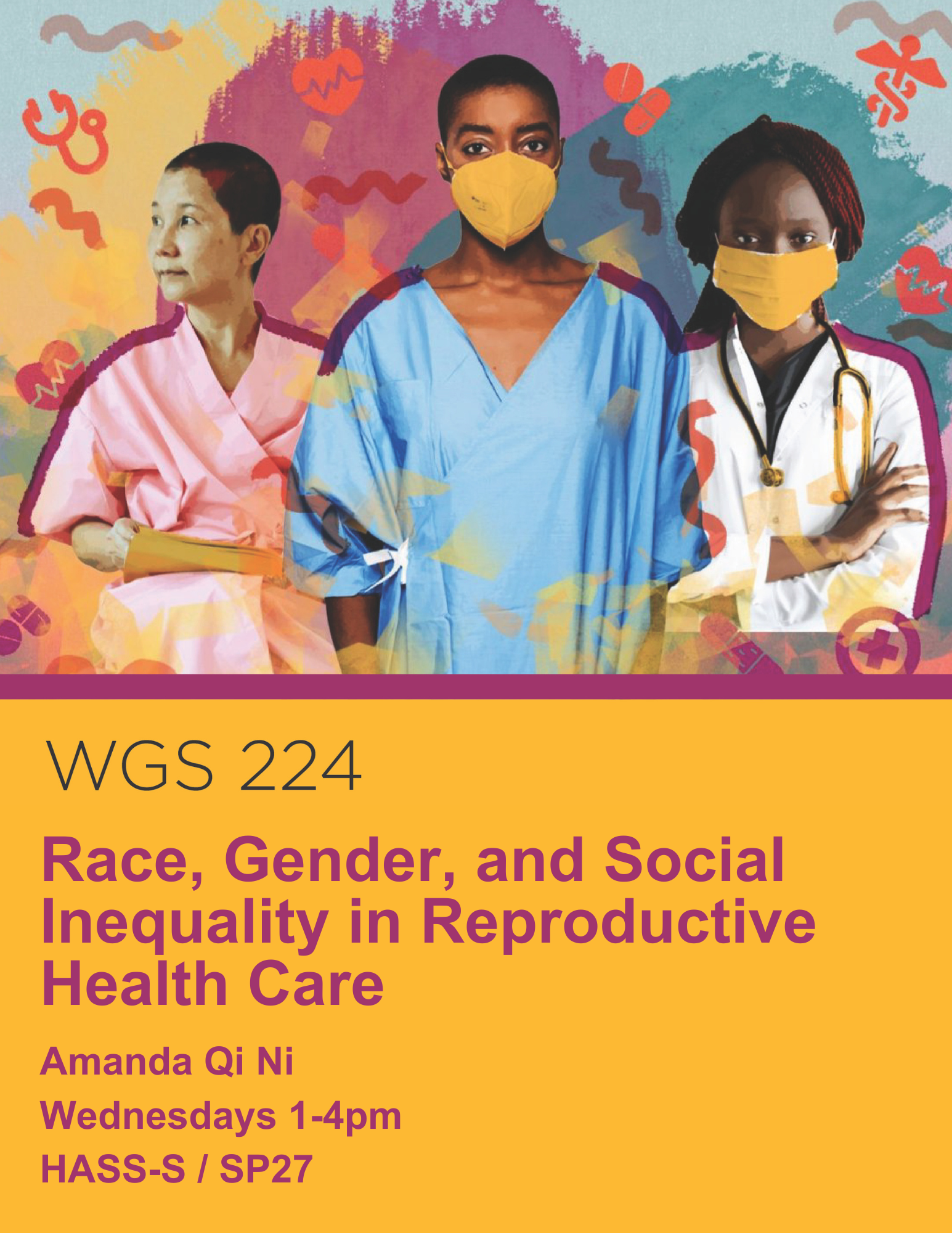
WGS.224 Race, Gender, and Social Inequality in Reproductive Health Care
Explores the politics of reproductive health care delivery in the United States and beyond, with a particular focus on how clinical care is shaped by--and, in turn, shapes--social inequality along axes of race and gender. Considers a variety of reproductive health issues from multiple perspectives, drawing on readings from the fields of history, anthropology, sociology, medicine, epidemiology, and law. Develops skills to interrogate how each field conceptualizes and values reproductive health, both explicitly and implicitly. Introduces major conceptual issues foundational to understanding the politics of reproduction. Goes on to cover topics such as the human biofemale reproductive lifecycle and social movements explicitly organized around reproductive health. Limited to 40.
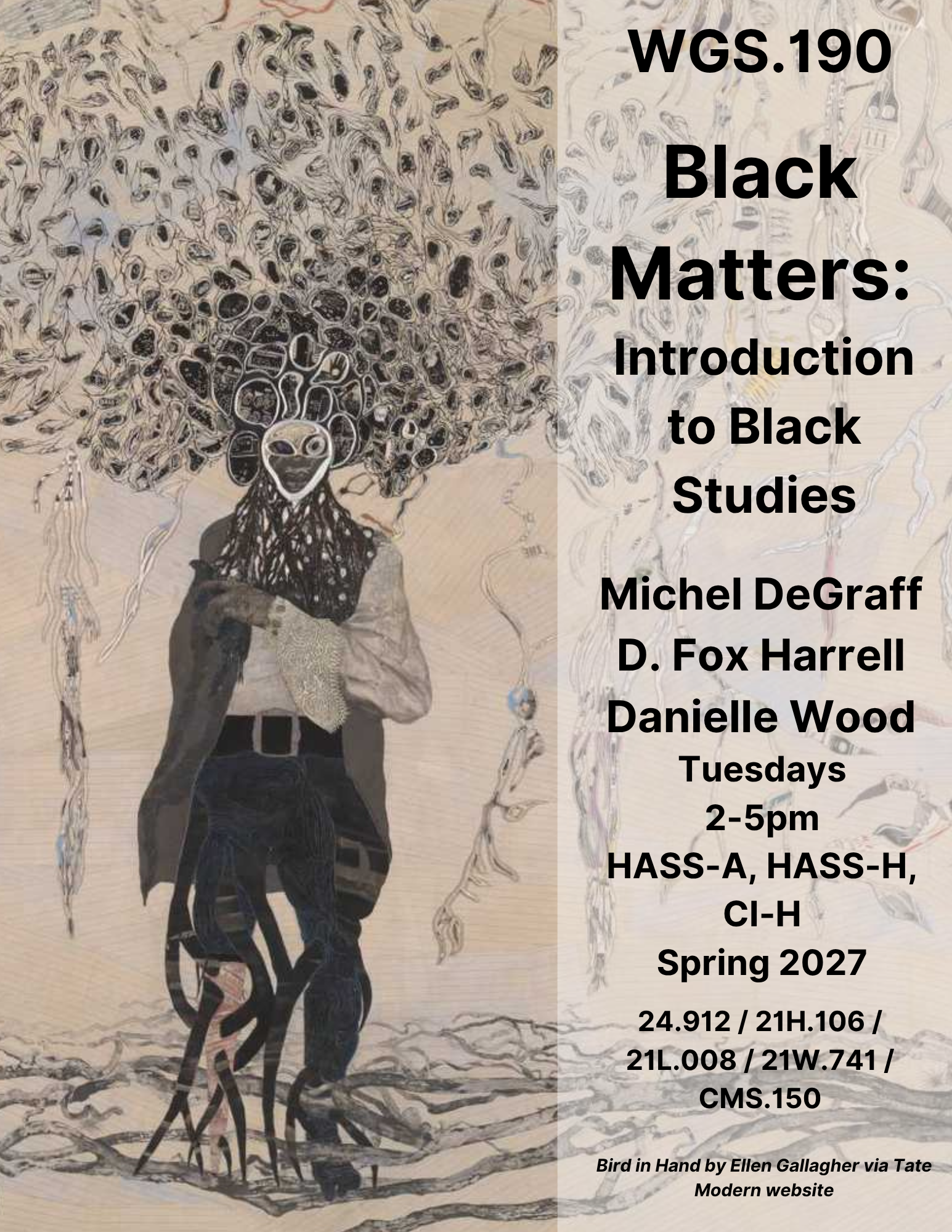
WGS.190 Black Matters: Introduction to Black Studies
Interdisciplinary survey of people of African descent that draws on the overlapping approaches of history, literature, anthropology, legal studies, media studies, performance, linguistics, and creative writing. Connects the experiences of African-Americans and of other American minorities, focusing on social, political, and cultural histories, and on linguistic patterns. Includes lectures, discussions, workshops, and required field trips that involve minimal cost to students.
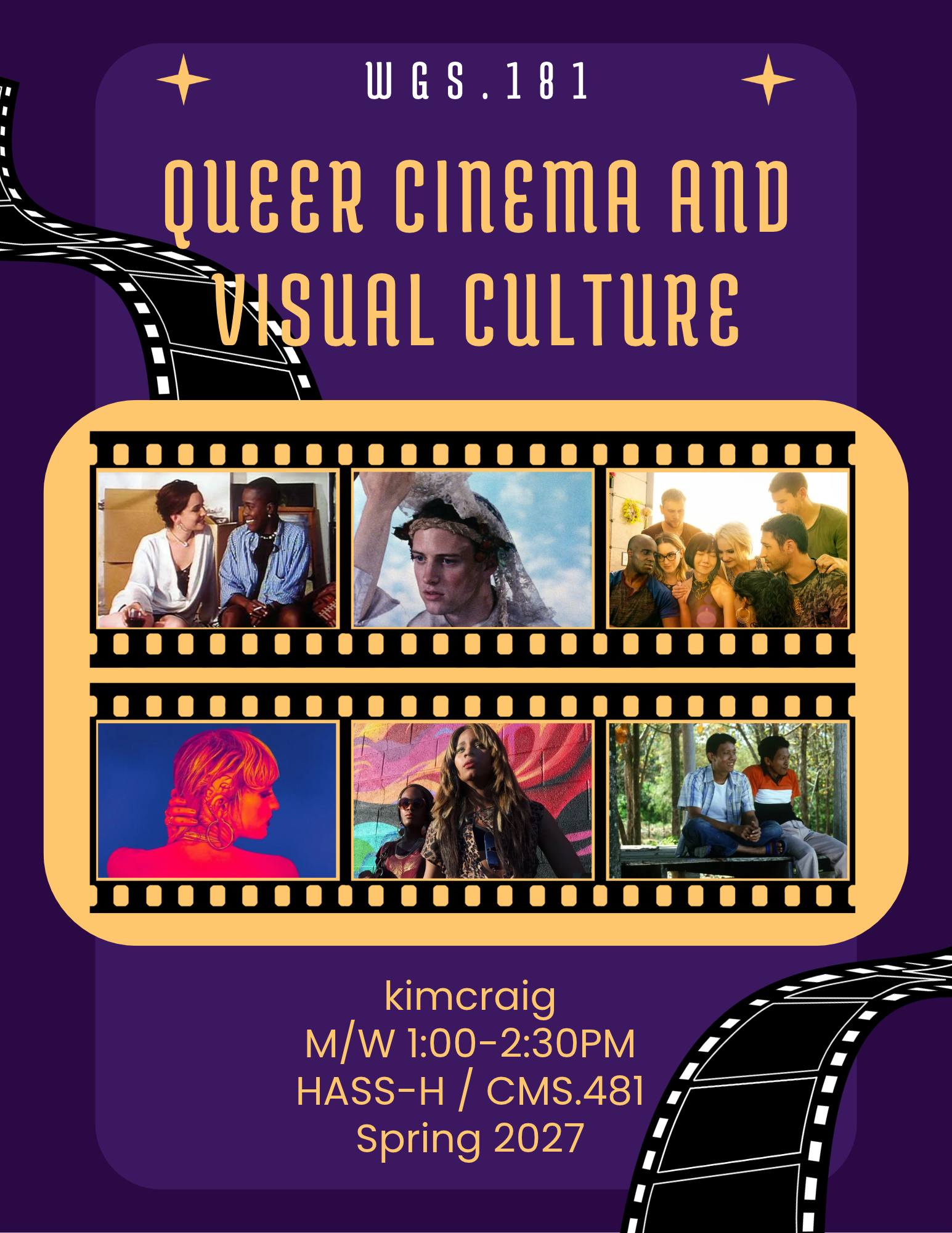
WGS.181 Queer Cinema and Visual Culture
Analyzes mainstream, popular films produced in the post-WWII 20th century US as cultural texts that shed light on ongoing historical struggles over gender identity and appropriate sexual behaviors. Traces the history of LGBTQ/queer film through the 20th and into the 21st century. Examines the effect of the Hollywood Production Code and censorship of sexual themes and content, and the subsequent subversion of queer cultural production in embedded codes and metaphors. Also considers the significance of these films as artifacts and examples of various aspects of queer theory.
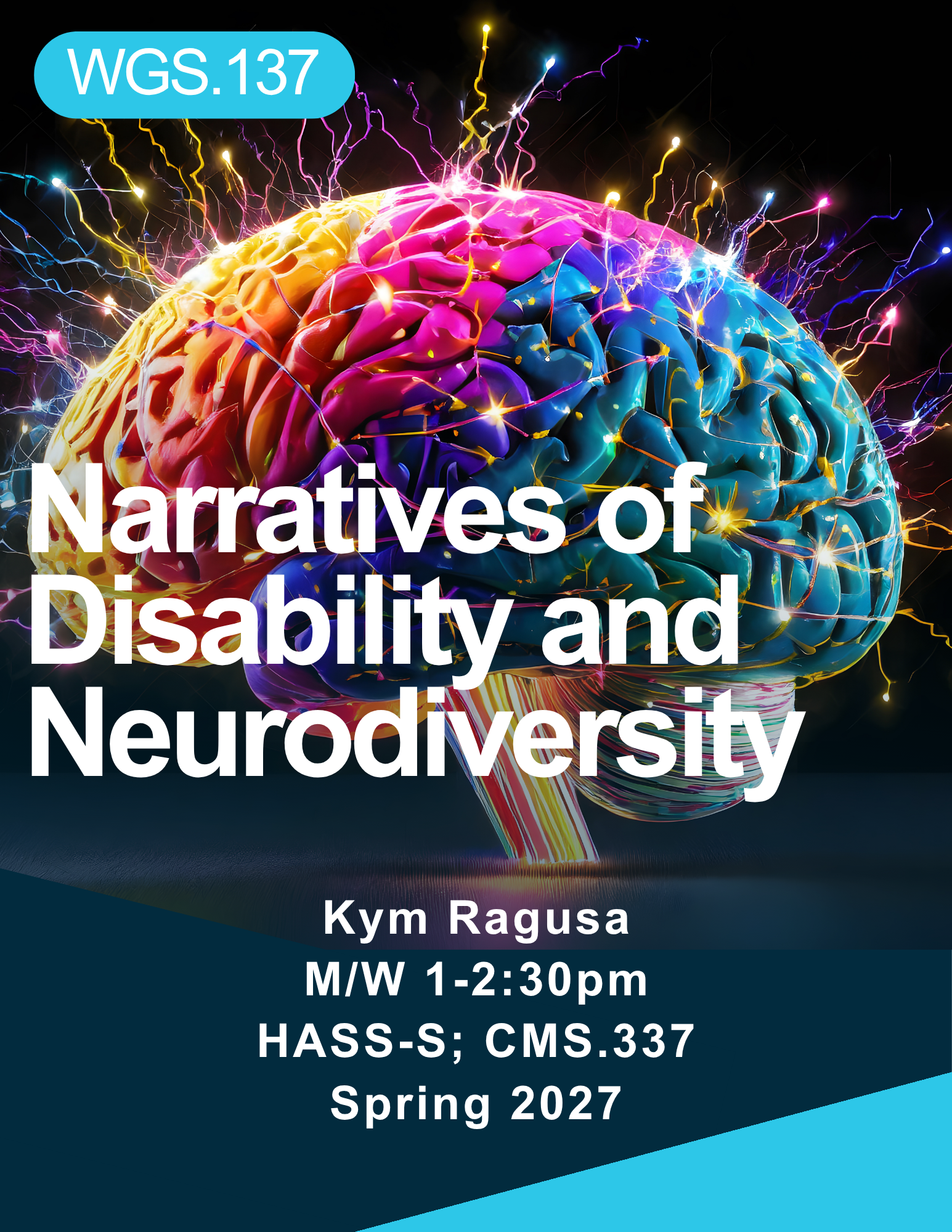
WGS.137 Narratives of Disability and Neurodiversity
Examines key theoretical concepts, texts, and other media forms by disabled and neurodivergent writers, theorists, activists, and artists. Investigates medical and social models of disability and their interconnections with race, gender, class, sexuality, age, ethnicity, etc. Uses an intersectional lens to address emerging connections between disability and the environment, investigating issues of accessibility in natural and built environments. Explores themes of visibility/invisibility, community, vulnerability, power, access, and creativity.
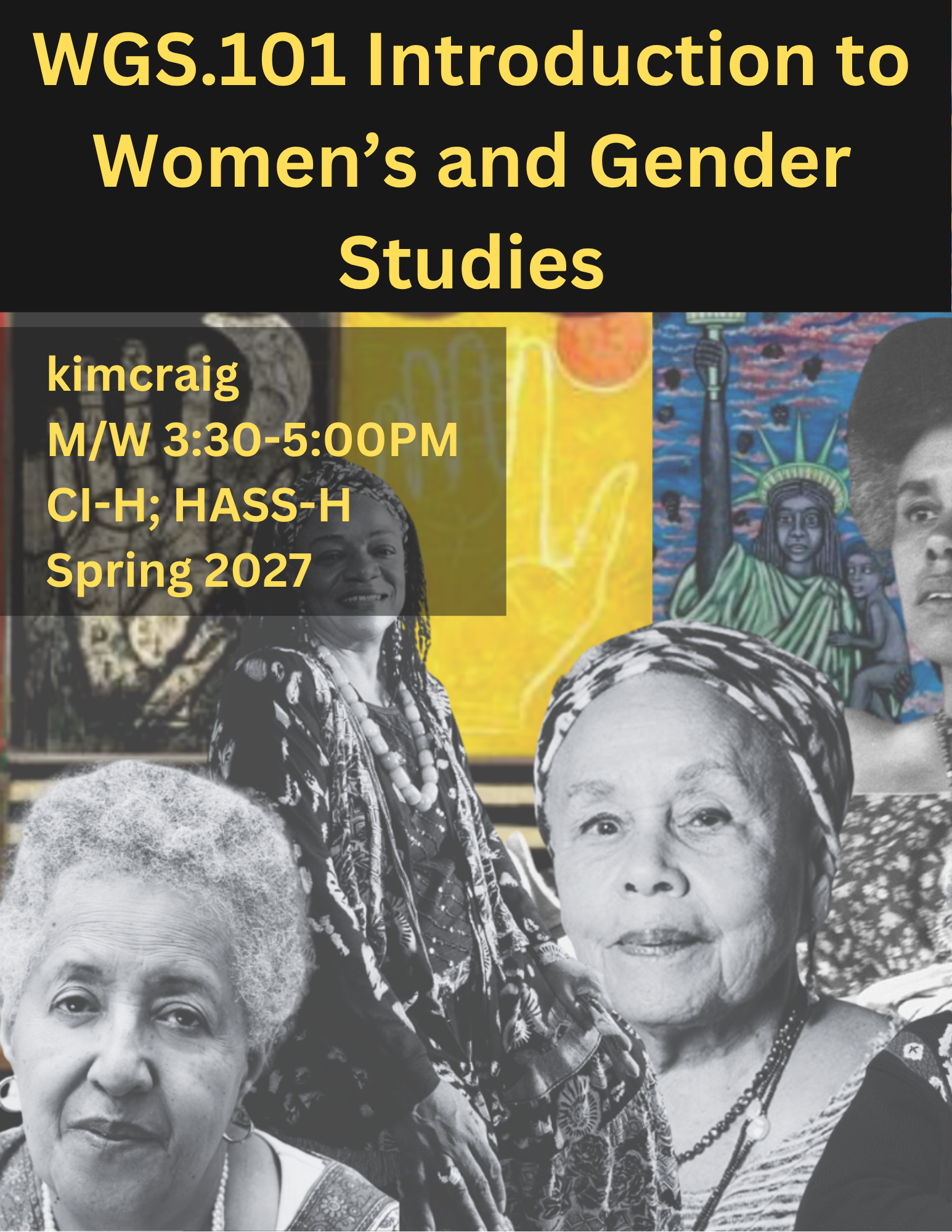
WGS.101 Introduction to Women’s and Gender Studies
Drawing on multiple disciplines - such as literature, history, economics, psychology, philosophy, political science, anthropology, media studies and the arts - to examine cultural assumptions about sex, gender, and sexuality. Integrates analysis of current events through student presentations, aiming to increase awareness of contemporary and historical experiences of women, and of the ways sex and gender interact with race, class, nationality, and other social identities. Students are introduced to recent scholarship on gender and its implications for traditional disciplines.

WGS.247 Race, Place, and Modernity in the Americas
Takes place in Brazil, taught in English. Issues explored in the course materials and on-site activities include the legacy of transatlantic slavery, indigenous dispossession, urban segregation, environmental racism, and reparations. Focusing on the work of Black and Indigenous people, particularly women, the course places a strong emphasis on the ways in which art and cultural activism can have an impact on racial justice issues.

WGS.225 The Science of Race, Sex, and Gender
Examines the role of science and medicine in the origins and evolution of the concepts of race, sex, and gender from the 17th century to the present. Focus on how biological, anthropological, and medical concepts intersect with social, cultural, and political ideas about racial, sexual, and gender difference in the US and globally. Approach is historical and comparative across disciplines emphasizing the different modes of explanation and use of evidence in each field.

WGS.110 Sexual and Gender Identities in Modern United States
Provides an introduction to the history of gender, sex, and sexuality in the modern United States, from the end of the 19th century to the present. Surveys historical approaches to the field, emphasizing the changing nature of sexual and gender identities over time. Traces attempts to control, construct, and contain sexual and gender identities. Examines the efforts of those who worked to resist, reject, and reform institutionalized heterosexuality and mainstream configurations of gendered power.

WGS.109 Women and Global Activism in Media and Politics
An interdisciplinary subject that examines questions of feminism, international women's issues, and globalization through the study of novels, films, critical essays, painting and music. Considers how women redefine the notions of community and nation, how development affects their lives, and how access to the internet and to the production industry impacts women's lives. Primary topics of interest include transformations of traditional values, social change, gender role distribution, identity formation, migration flows, globalization and development, popular culture, urban life, cyber-culture, activism, and human rights.

WGS.315 Colonialism in South Asia and Africa: Race, Resistance, and Gender
Provides a comparative perspective on the history of colonialism in India and Africa. Explores the political, social, and economic changes brought about by colonial rule. Discusses the international context for the emergence of European Imperialism in the 19th century; the nature of early colonial expansion and consolidation; the re-invention of tradition in colonial societies, especially with regard to racial and ethnic identity, gender, religion, and caste; and expressions of anti-colonial resistance. Students taking graduate version complete additional assignments.

WGS.247 Race, Place, and Modernity in the Americas (Copy)
Based in São Paulo, this course examines the relationship between race and place in the formation of modern Brazil and the U.S. through comparative analysis and interdisciplinary study of literature, film, visual art, music, and performance. We will visit key cultural and historical sites; interact with archives and museum collections; and, most importantly, engage in dialogue with local scholars, religious leaders, community organizers, and activists.
Joaquin Terrones

WGS.301 Feminist Thought
Analyzes theories of gender and politics, especially ideologies of gender and their construction; definitions of public and private spheres; gender issues in citizenship, the development of the welfare state, experiences of war and revolution, class formation, and the politics of sexuality. Graduate students are expected to pursue the subject in greater depth through reading and individual research.